
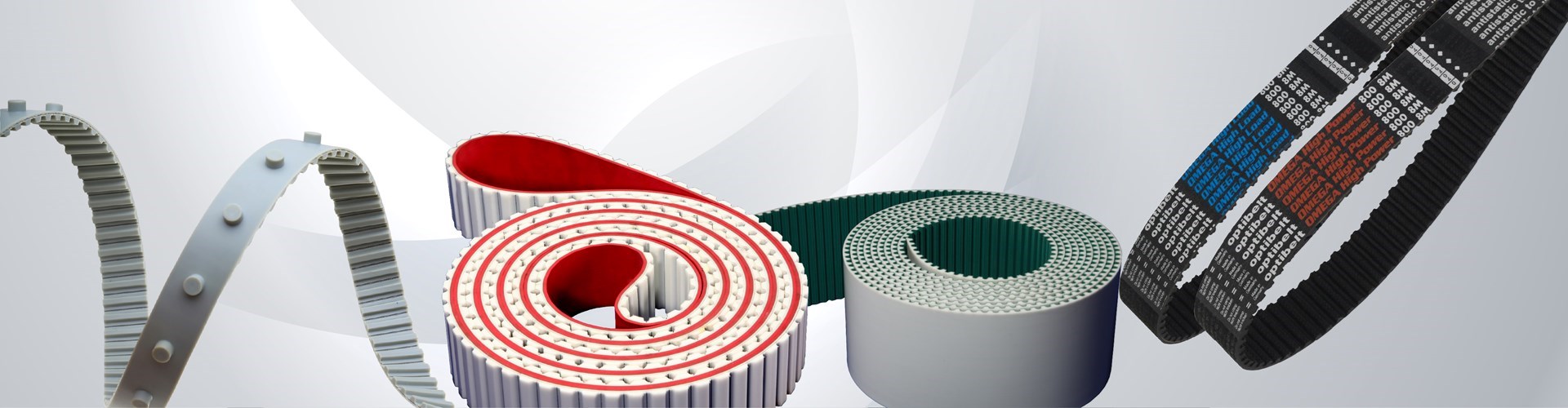
Industrial Timing Belts
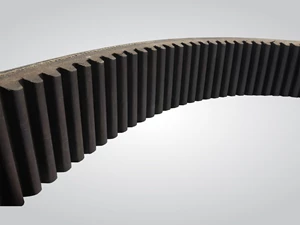
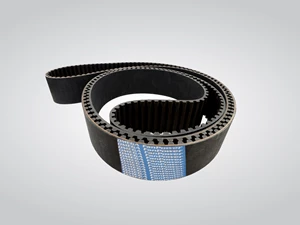
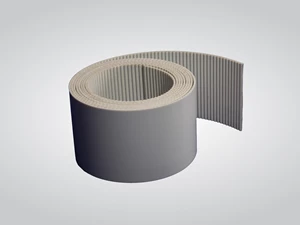
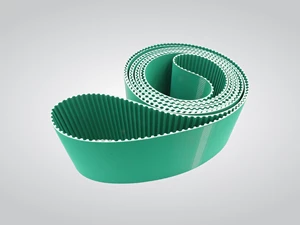
Industrial Timing Belts
Industrial timing belts are critical components in mechanical power transmission systems, playing a key role in ensuring precise synchronization and timing of moving parts. These belts are typically made from durable rubber, polyurethane, or other composite materials, featuring teeth on their surface that engage with pulleys or sprockets. Their standout characteristics include high-precision motion transfer, minimal slippage, and improved efficiency. Timing belts are widely used across various industries, including automotive, industrial machinery, robotics, household appliances, oil, gas and petrochemical, tile and ceramics, and many others. Selecting the appropriate timing belt—based on operating conditions, applied loads, and environmental factors—is essential for optimal performance and system longevity.
Role of Industrial Timing Belts
Industrial timing belts play a vital role in numerous industries. In summary, their primary functions include:
Precise Power Transmission
Timing belts are designed to transfer motion and power between machine components with high accuracy. Thanks to their toothed design, they prevent slippage and ensure components move in perfect synchronization.
Synchronization of Moving Parts
A key function of timing belts is to coordinate the movement of parts that must operate in unison. For example, in automotive engines, the timing belt synchronizes the crankshaft and camshaft.
Reduced Vibration and Noise
The specialized tooth design minimizes vibration and noise, making them ideal for machinery requiring precise and quiet operation.
Increased Efficiency and Equipment Lifespan
By optimizing power transfer and reducing wear on components, these belts enhance system efficiency and extend the service life of industrial equipment.
In conclusion, industrial timing belts not only guarantee precision and coordination in machinery performance but also reduce maintenance costs and improve overall system productivity. As a result, they are considered essential components in modern industries.
Advantages of Industrial Timing Belts
• Precise Tooth Engagement: The teeth are designed to fully mesh with pulleys for secure engagement.
• Slip-Free Power Transmission: The toothed structure virtually eliminates slippage.
• Quiet Operation: They perform silently even at high speeds.
• High Durability: Constructed from robust materials such as polyurethane (PU) or reinforced rubber.
• Environmental Resistance: Resistant to abrasion, oil, and temperature variations.
Types of Industrial Timing Belts
Industrial timing belts are classified based on tooth profile, application, material, and special features. The main categories are as follows:
Based on Tooth Profile
The tooth profile significantly affects performance, precision, and application. Common profiles include:
a) Imperial Profiles:
• XL (Extra Light): Pitch of 5.08 mm; suitable for light loads and high speeds.
• L (Light): Pitch of 9.53 mm; ideal for medium-duty applications.
• H (Heavy): Pitch of 12.7 mm; designed for heavy loads.
• XH (Extra Heavy): Pitch of 22.225 mm; used in heavy industrial applications.
• XXH (Double Extra Heavy): Pitch of 31.75 mm; for extremely heavy machinery.
b) Metric Profiles:
• T2.5, T5, T10, T20: T-series profiles with metric pitches (2.5, 5, 10, 20 mm); provide precise power transmission for various applications.
• AT5, AT10, AT20: Similar to T-series but with higher torque capacity.
• HTD (High Torque Drive): Includes 3M, 5M, 8M, 14M, and 20M; designed for high-speed, high-torque applications.
• STD (Super Torque Drive): Includes 3M, 5M, 8M, 14M, and 20M; an improved version of HTD with greater strength.
Based on Material
The material used determines performance and resistance:
• Neoprene Rubber: Resistant to heat and oil; suitable for general-purpose applications.
• Polyurethane: Highly resistant to abrasion, chemicals, and high temperatures.
• Fiberglass Reinforcement: Enhances tensile strength.
• Steel Cords: Ideal for heavy-load applications.
Based on Special Features
• Double-Sided Timing Belts: Feature teeth on both sides for power transmission in both directions.
• Oil- and Heat-Resistant Belts: Designed for harsh industrial environments.
• Anti-Static Belts: Suitable for equipment sensitive to static electricity.
• Silent Timing Belts: Specially designed to minimize noise.
Applications of Timing Belts
Below is an overview of timing belt applications across various industries:
Packaging and Printing Industries
Applications:
• Product handling systems: Precise control of packages on production lines.
• Printing machinery: Accurate paper and material feeding.
• Cutting and laminating equipment: Precise blade movement for high-accuracy cutting.
Advantages:
• High operational precision
• Smooth, slip-free motion
• Reduced maintenance costs
Food and Pharmaceutical Industries
Applications:
• Hygienic conveyor systems: Safe transport of food and pharmaceutical products in compliance with sanitary standards.
• Packaging machinery: Precise control during packaging and labeling.
• Food processing equipment: Accurate blade movement for cutting meat, bread, and other products.
Advantages:
• Resistant to washing and disinfectants
• Polyurethane construction for hygiene compliance
• High precision and fast processing
Textile and Fabric Industries
Applications:
• Weaving machines: Precise control of needles and fibers.
• Dyeing and finishing machines: Controlled fabric movement during processing.
• Cutting and sewing systems: Accurate fabric cutting and stitching.
Advantages:
• No slippage at high speeds
• Long service life under pressure and friction
• Precise operation for high-quality production
Robotics and Automation
Applications:
• Robotic arms: Precise control of moving parts.
• Intelligent transport systems: Industrial robots and automated production lines.
• CNC machines: Accurate axis movement.
Advantages:
• Controlled, delay-free motion
• Smooth and rapid performance
• Minimal need for lubrication
Electronics and Semiconductor Industries
Applications:
• Electronic component assembly equipment: Precise component placement.
• Testing and quality control machines: Accurate part positioning for testing.
• Printers and plotters: Precise paper and print head movement.
Advantages:
• Quiet, vibration-free operation
• Millimeter-level precision
• Long lifespan and dust resistance
Robotics and Automation
Applications:
• Robotic arms: Precise control of moving parts.
• Intelligent transport systems: Industrial robots and automated production lines.
• CNC machines: Accurate axis movement.
Advantages:
• Controlled, delay-free motion
• Smooth and rapid performance
• Minimal need for lubrication
Medical and Laboratory Industries
Applications:
• Laboratory automation systems: Precise sample handling.
• Dental equipment: Accurate control of sensitive tools.
Advantages:
• Error-free precise motion
• High durability in medical environments
• Resistance to disinfectants
Mining and Construction Industries
Applications:
• Drilling and extraction machinery: Power transmission in heavy equipment.
• Conveyor systems: Material transport in mines and related industries.
• Concrete and material mixers: Controlled blade movement for mixing.
Advantages:
• Handles heavy loads and harsh conditions
• Reduced need for frequent repairs
• Resistance to dust and high temperatures
Oil, Gas, and Petrochemical Industries
Advantages:
• Resistance to gases and petroleum compounds
• High-precision power transmission with minimal slippage
• Lower repair and maintenance costs in refinery equipment
Applications:
• Chemical and oil transfer pumps: Critical role in pumps moving fluids in refineries.
• Compressors and high-pressure equipment: Enhances efficiency in systems requiring minimal power loss.
• Industrial conveyors: Transport of raw materials and finished products in processing units.
• Generators and turbines: Used in auxiliary systems for power transmission and internal mechanism synchronization.
• Industrial mixers and agitators: Employed in devices for mixing and blending chemicals in refining processes.
Tile and Ceramics Industry
Advantages:
• Withstands continuous pressure and impacts in production lines
• Precise controlled movement of tiles and ceramics on conveyors
• Resistant to dust, moisture, and high temperatures
Applications:
• Tile and ceramic presses: Synchronize mold movement and transmit power to mechanical components.
• Firing kilns: Conveyor systems transporting tiles in and out of kilns.
• Glazing and printing equipment: Precise tile movement during glazing and pattern printing.
• Cutting and packaging machines: Critical role in equipment designed for tile cutting and arrangement.
Pulp and Paper Industries (Paper and Cardboard)
Advantages:
• Synchronized, slip-free motion in paper production
• Resistance to abrasion from cellulose fibers
• Reduced vibration and quiet operation
Applications:
• Paper and cardboard production lines: Power transmission in forming and manufacturing equipment.
• Printing and cutting machinery: Ensures precision when handling rolls and sheets.
• Packaging and carton-making systems: Coordinates packaging processes and cardboard transport.
• Industrial paper dryers: Transfers paper rolls through drying sections.