
Cement Industry
Belts in the Cement and Gypsum Industry
Industrial belts play a pivotal role in the cement and gypsum industry, contributing to extraction processes, crushing, material handling, and the performance of heavy machinery. This industry, which includes the production of cement, gypsum, and other mineral products, requires belts with high resistance to abrasion, pressure, high temperatures, and harsh environmental conditions. Appropriate belts increase production line efficiency, reduce downtime, and ensure stable equipment performance, thereby improving the quality of production processes.
Commonly Used Belts in the Cement and Gypsum Industry
Rubber Conveyor Belts Applications:
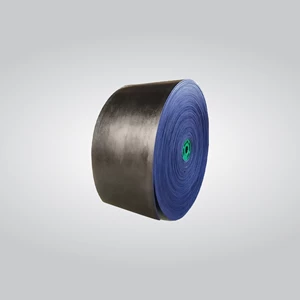
Rubber conveyor belts are used in the cement and gypsum industry for transporting raw materials (such as limestone, clay, and raw gypsum), semi-processed materials, and finished products (such as clinker and cement) in production lines, extraction, and storage areas. These belts are applied in heavy-duty processes like transferring materials from mines to factories or moving clinker in kilns. Importance: Heavy load capacity, resistance to abrasion and heat, flexibility on inclines, durability in harsh conditions. Examples: Transferring limestone and clay from mines to crushers, moving hot clinker from kilns to coolers, and transporting packaged cement to warehouses.
V-Belts Applications:
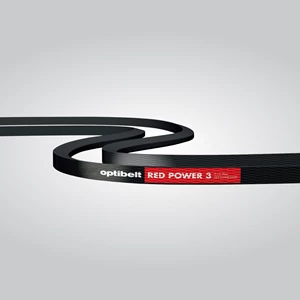
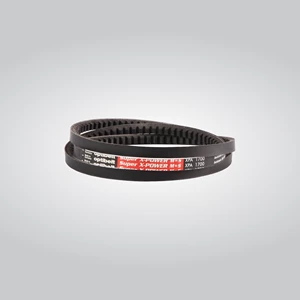
V-belts are used in the cement and gypsum industry for power transmission in heavy machinery such as crushers, raw material mills, rotary kilns, and industrial fans. These belts are also applied in auxiliary equipment like pumps and compressors. Importance: Strong power transmission, resistance to heavy loads, heat and abrasion resistance, easy installation and maintenance. Examples: Power transmission in primary and secondary crushers, cement mills, kiln cooling fans, and hydraulic pumps.
Ribbed Belts Applications:
Ribbed belts are used in the cement and gypsum industry for power transmission in machinery requiring smooth and vibration-free motion, such as material transfer rollers or auxiliary systems in production lines. Importance: Smooth and uniform transfer, high flexibility, resistance to heat and abrasion. Examples: Material transfer rollers in production lines, clinker cooling systems, and power transmission in auxiliary equipment like industrial fans.
Endless Rubber Timing Belts Applications:
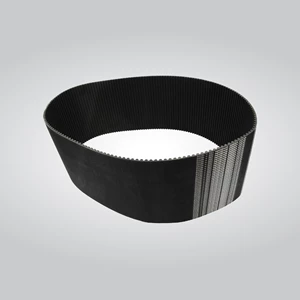
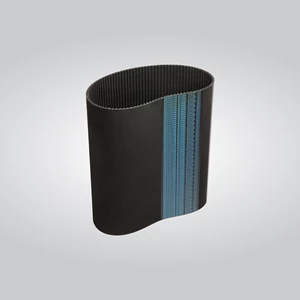
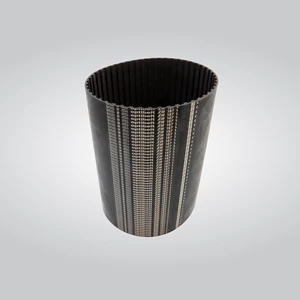
Endless rubber timing belts are used in precise machinery in the cement and gypsum industry, such as cement packaging equipment or motion control systems in production lines. These belts are suitable for processes requiring accurate synchronization. Importance: High precision, pressure resistance, long durability. Examples: Cement bag packaging machines, motion control systems in production lines, and precise gypsum processing machinery.
PVC Conveyor Belts Applications:
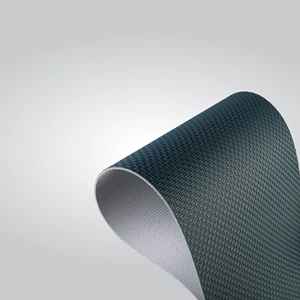
PVC conveyor belts are used more limitedly in the cement and gypsum industry, typically for transporting lighter materials or finished products such as cement and gypsum bags in packaging and storage lines. These belts are applied in cleaner processes. Importance: Flexibility and lightness, abrasion resistance, easy cleaning. Examples: Transferring cement and gypsum bags in packaging lines, moving finished products to warehouses, and loading processes.