
Flour and Bread Industry
Belts in the Flour and Bakery Industry
Industrial belts play a fundamental role in the flour and bakery industry, contributing to production processes, material handling, and smooth machinery operation. This industry, which includes flour production, dough processing, bread baking, and related baked goods, requires belts with high resistance, compliance with sanitary standards, and the ability to perform in demanding environments such as humidity and high temperatures. Appropriate belts increase production line efficiency, reduce breakdowns, and ensure product quality. High-quality belts supplied by Ravand Trans Apadana Company guarantee stable quality in this industry's production lines.
Commonly Used Belts in the Flour and Bakery Industry
V-Belts Applications:
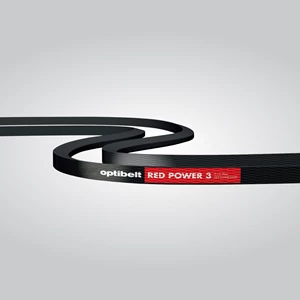
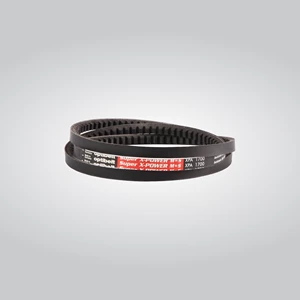
V-belts are used in the flour and bakery industry for power transmission in heavy machinery such as flour mills, dough mixers, and baking systems. They are also applied in auxiliary equipment like cooling fans and material transfer pumps. Importance: Strong power transmission, resistance to heavy loads, easy installation and maintenance. Examples: Power transmission in grain mills, dough mixers, cooling fans in bread ovens, and pumps for raw material transfer.
Ribbed Belts Applications:
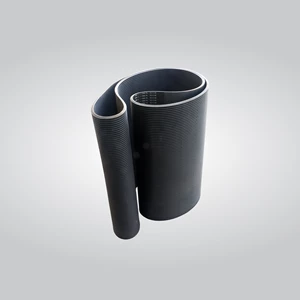
Ribbed belts are used in the flour and bakery industry for power transmission in machinery requiring smooth and vibration-free motion, such as dough transfer rollers or bread packaging systems. These belts are applied in high-speed production lines. Importance: Smooth and uniform transfer, high flexibility, resistance to abrasion and heat. Examples: Dough transfer rollers in bread production lines, industrial bread packaging systems, and post-baking cooling mechanisms.
One-Side Timing, One-Side Ribbed Belts (Combination Belts) Applications:
These hybrid belts are used in the flour and bakery industry for machinery requiring precise motion transfer combined with smooth power transmission. They are applied in production lines needing accurate synchronization (such as dough cutting and shaping) alongside power delivery. Importance: Precision and synchronization, smooth power transfer, application flexibility. Examples: Dough cutting machines, industrial bread shaping equipment (e.g., baguettes), and lines with complex coordination.
PVC and Polyurethane (PU) Conveyor Belts Applications:
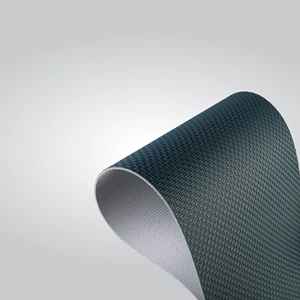
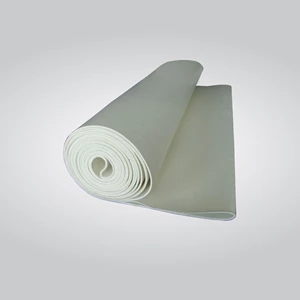
PVC and PU conveyor belts are used in the flour and bakery industry for transporting raw materials (such as flour and dough) and finished products (such as bread and baked goods) in production and packaging lines. These belts comply with sanitary standards like FDA and are suitable for direct food contact. Importance: Compliance with sanitary standards, non-stick surface, resistance to moisture and grease, durability and flexibility. Examples: Flour transfer in milling lines, dough handling in shaping machines, bread transfer in cooling lines and packaging, and use in roller magnet devices.
Rubber Conveyor Belts
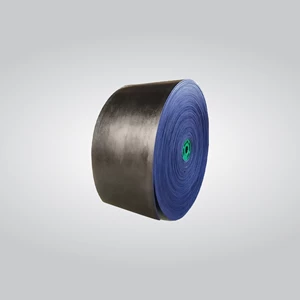
Rubber conveyor belts play a significant role in the flour and bakery industry, particularly in elevators (such as bucket elevators), for transporting raw materials like wheat, flour, or dough. These belts have widespread applications due to their specific features. Importance: Increased efficiency, reduced waste, compliance with sanitary standards, durability and resistance, flexibility in production line design, safety. Examples: Transferring wheat from silos to mills, moving flour to mixers, transporting dough to shaping machines or ovens, and handling semi-finished or final products.