
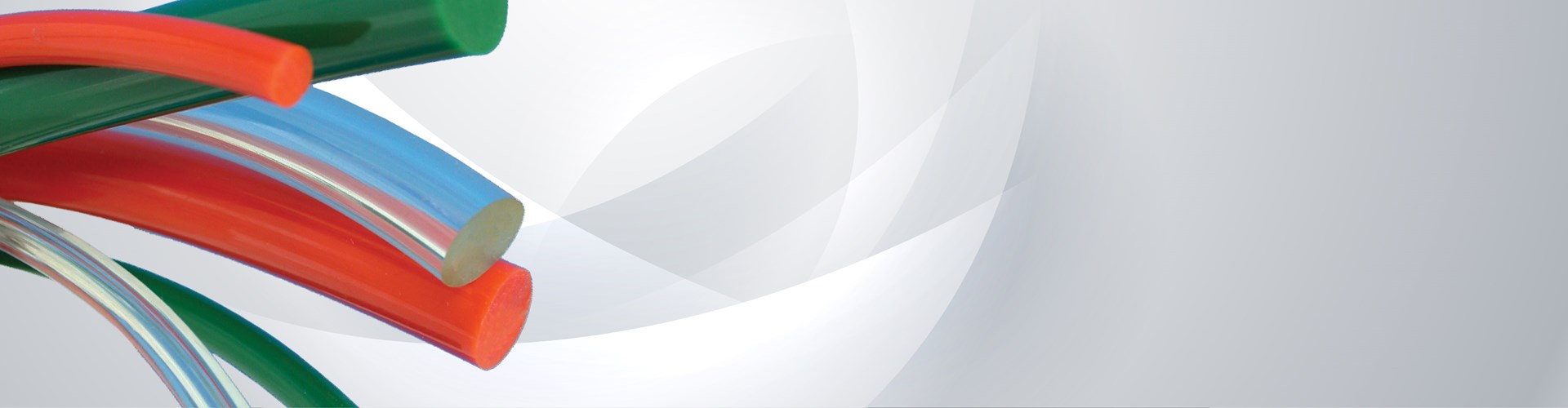
Welded Belts (Round & V-Welded Belts)
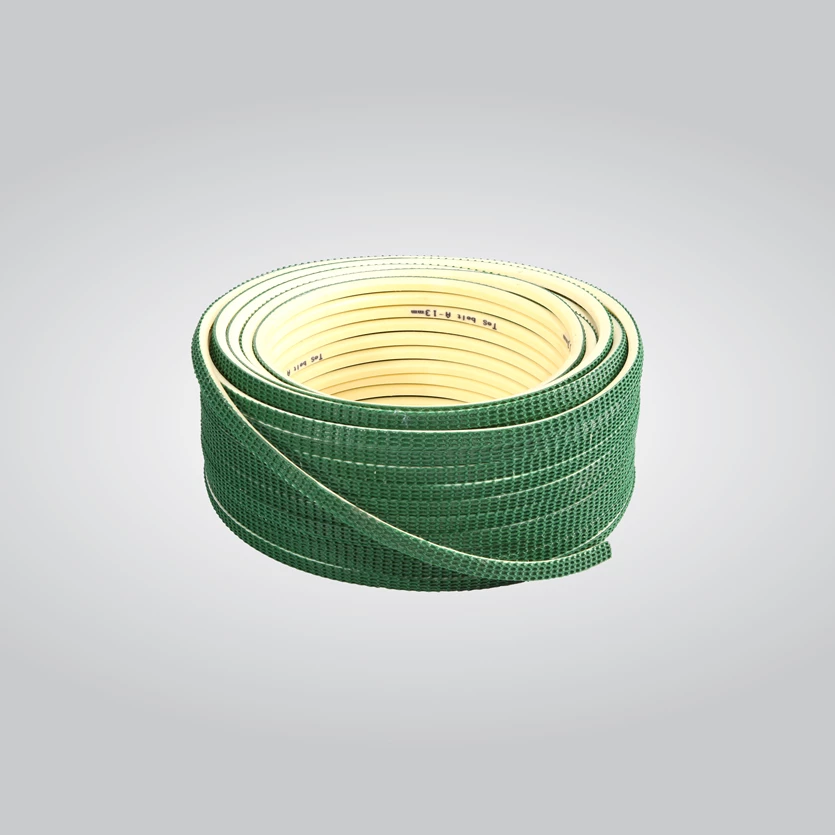
Welded belts refer to those joined seamlessly using welding methods (thermal, ultrasonic, or laser), either during manufacturing or on-site. These belts are designed for heavier-duty conditions and higher temperatures. In the tile and ceramics industry, welded belts are available with various cross-sections (quadrangular, pentagonal, and heptagonal). They can also be produced with or without internal cords, and with or without grip (tread patterns); the internal cords provide enhanced tensile strength.
A key characteristic of welded belts is the use of elastomeric polyurethane, which offers exceptional abrasion resistance.
Another advantage is their ability to operate at high temperatures (ranging from -35°C to +80°C) with high precision. These belts are resistant to abrasion, oil, and chemicals, while maintaining high tensile strength.
Standards for welded V-belts are based on sections A, B, C, D, M, Z.
Technical Specifications
• Width: 10 to 22 mm or more, depending on the required load.
• Length: Typically 2 to 10 meters, suitable for shorter paths.
• Material:
o Kevlar or carbon fiber: Heat-resistant up to 400°C with high tensile strength.
o Reinforced polyester: For general applications with moderate temperatures.
• Maximum Load: Up to 1000 kg per meter.
Joining Methods
• Thermal or ultrasonic welding for polymer belts.
Applications in Industry
Tile and Ceramics:
• Transferring tiles in tunnel kilns (often paired with metal belts).
• Uniform power transmission in hydraulic presses.
• Moving hot tiles in post-kiln cooling systems.
• The back side of the belt is used to transport tiles; depending on the application, this side can feature special coatings such as foam or grip patterns.
Mining Industry:
• Transporting heavy stones or minerals (reinforced polyester welded belts, loads up to 800 kg per meter).
Comparison and Selection
• Round Belts: Ideal for high speeds and curved paths, but with limited load capacity.
• Welded Belts: Perfect for high temperatures and heavy loads, though with slightly less flexibility.